Why Teatro Flamenco Málaga
Why Teatro Flamenco Málaga
Flamenco in its Andalusian home
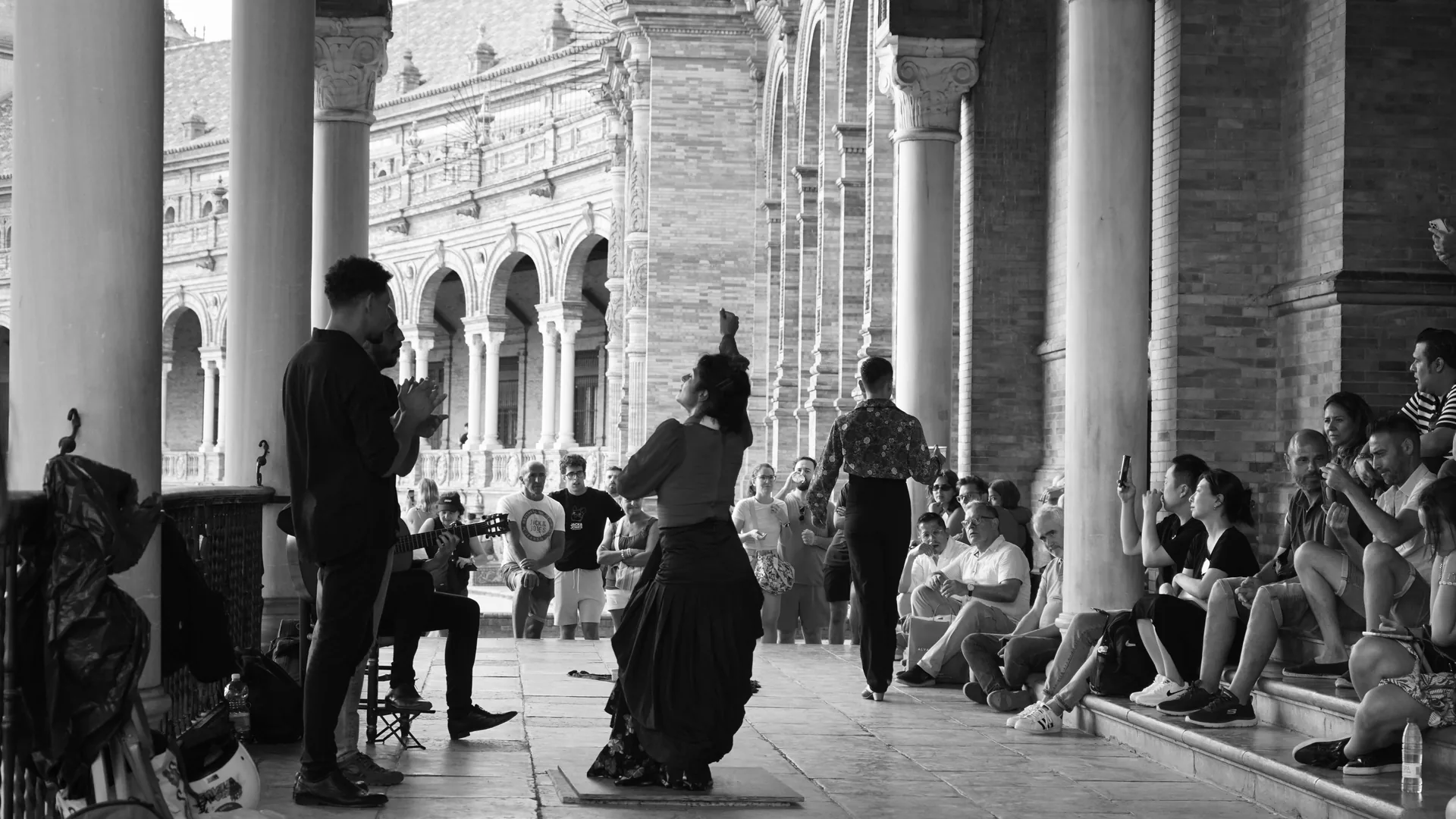
Flamenco brings together three Andalusian traditions — the singing (cante), the dancing (baile) and the guitar (toque) — and UNESCO has placed it on its list of Intangible Cultural Heritage. Andalusia is where the art comes from, and Málaga sits squarely inside that region. The city even gave its name to the malagueña, one of flamenco's song forms. Watching it performed a few metres away, where you can hear each breath and every strike of a heel, bears little resemblance to seeing it on a large stage or through a screen.
A theatre built for the art
Unlike a bar or restaurant that fits a show in around the tables, Teatro Flamenco Málaga stages a flamenco show every day of the year. You notice it in the room itself: a real stage, seating facing the stage, and a programme carried by a professional cast, all within the old centre. The setup makes the performance the point of the evening, not a side dish to a meal.
Intimate, close and serious
The scale keeps things close — a cast of dancers, singers and musicians working close to the seats. Ask people who've been and the same words come back: intense, moving, hair-raising. At roughly an hour it makes a concentrated high point for an evening, and an easy one to plan a night in the old town around.
The elements of flamenco
The elements of flamenco
A flamenco performance is built from a handful of parts working together. Recognising them adds to the evening — here's what to keep an eye and ear on.
- El cante
The song
The bare, exposed voice at the centre of it all — the cantaor or cantaora lets out sorrow, longing and joy in a way that can feel almost uncomfortably direct. The song is regarded as flamenco's soul, and everything else on stage bends toward it. The malagueña, named for this very city, is one of its many forms.
- El baile
The dance
Upright carriage, the sweep of the arms (braceo) and a barrage of drumming feet (zapateado) — the bailaor or bailaora converts emotion into motion, the heels beating the compás down into the boards. Close to the stage you register it in your chest as much as your eyes.
- El toque
The guitar
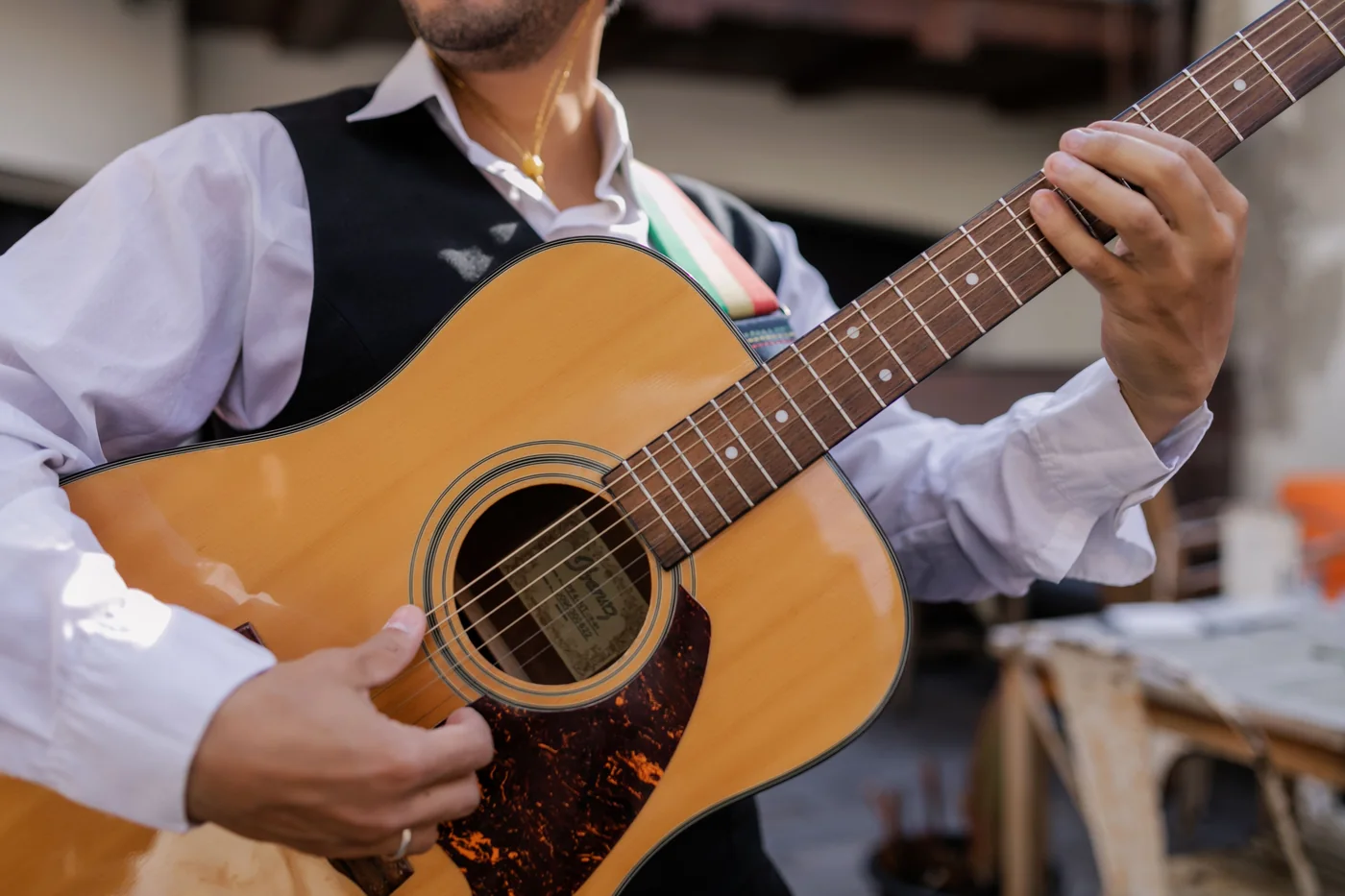
On a proper stage the guitar carries further, but the tocaor's role is unchanged: hold the time, follow the cante, and open up into falsetas — the solo passages — between verses.
- El compás
Rhythm & jaleo
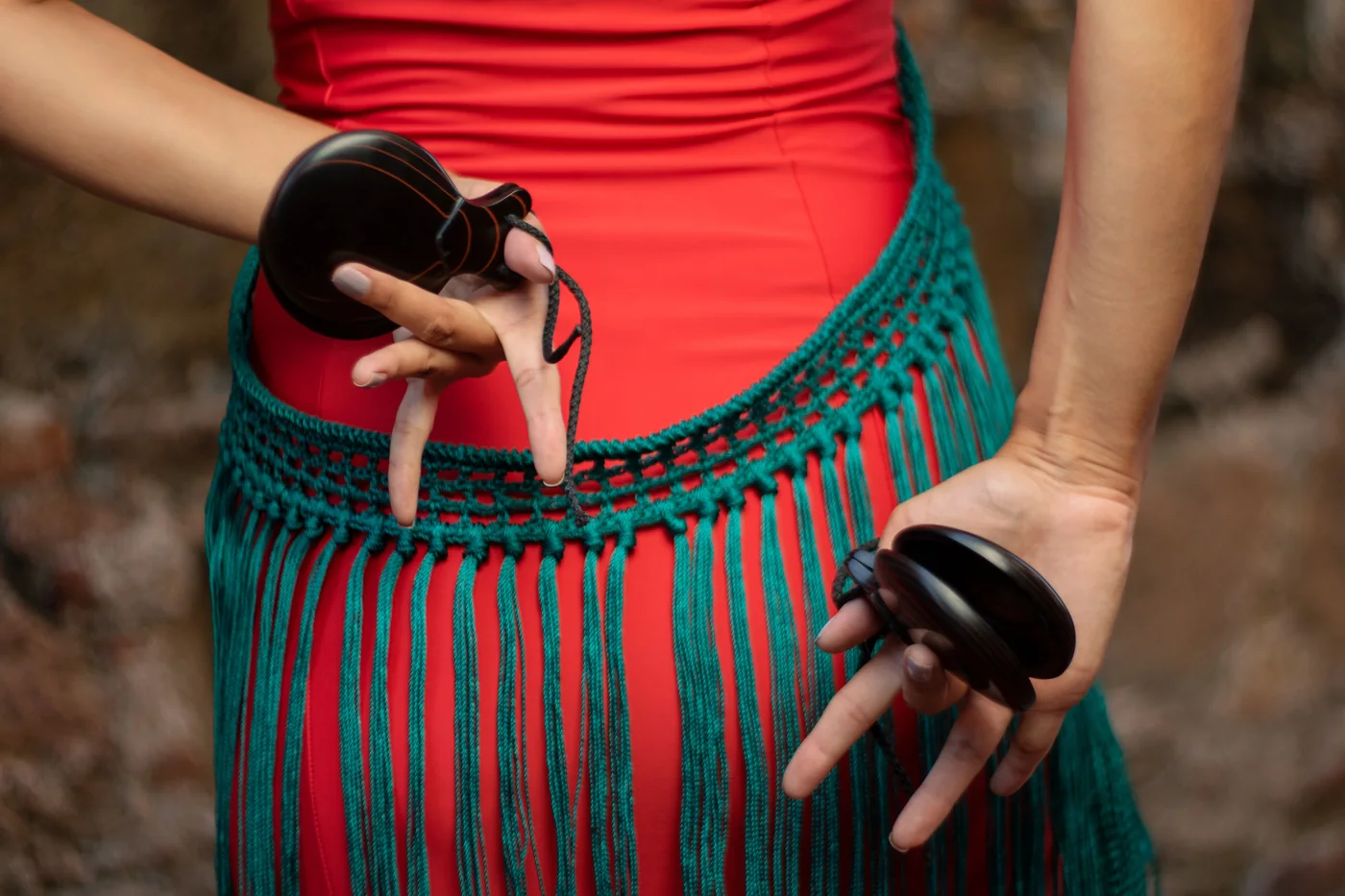
Everything sits on compás, the interlocking rhythm at flamenco's core, marked by handclaps (palmas), finger-snaps (pitos) and jaleo — the calls that lift the performers mid-number.
- Los palos
The styles
Rather than a single style, flamenco splits into distinct forms called palos, each carrying its own mood and tempo — from the weighty grief of the soleá and seguiriya to the brightness of the alegrías, the Málaga-born malagueña, and the playful bulería that usually closes out the evening.
- El duende
The spirit
When everything clicks, flamenco reaches for duende — the slippery, shiver-inducing charge that carries a performance past mere skill into something else. It can't be booked in advance; a great night is the pursuit of it, which is precisely why being in the room beats any recording.
The theatre & getting there
The theatre & getting there
Teatro Flamenco Málaga is a theatre in the centre of Málaga that stages flamenco daily. Here's what's worth knowing before you go, and how to get there.
A room built around the stage
Teatro Flamenco Málaga is housed in the Theatro Club Málaga, with a full stage and seating drawn in close, so most places sit near the action. That nearness is the draw: you pick up the footwork, the faces, the little signals passing between performers. Seats aren't numbered; places are taken in strict order of arrival, so turning up early gets you closest.
In Málaga's historic centre
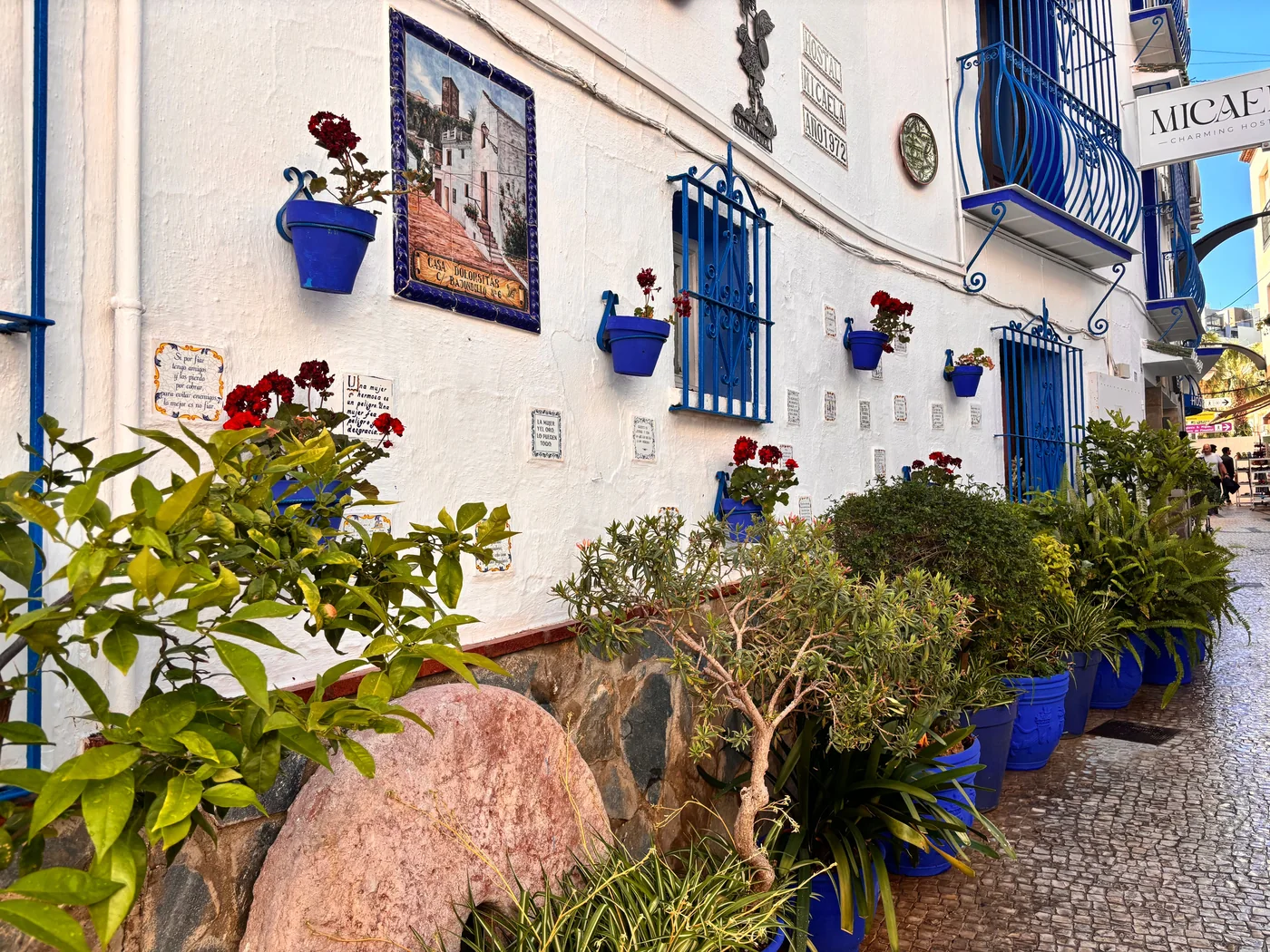
The theatre stands in Málaga's old quarter, the small and mostly car-free core of the city that gathers around the Cathedral, the Roman Theatre and the shopping avenue of Calle Larios. On a warm evening it's among the most walkable and pleasant parts of town to be in, whether before the show or after it.
Show, not dinner
This is a place for the performance, not a dinner show — tickets usually cover the show alone, occasionally with the option of a drink, which keeps attention on the stage. Look at what your particular option includes when you book, and plan on eating separately somewhere in the old town.
Getting there
From most central hotels the old quarter is a short, easy walk, and since the streets are narrow and mainly for pedestrians, walking is the simplest way in. If you're coming from further afield, buses and taxis serve the centre well — head for the old-town core and cover the final lanes on foot.
Flamenco & Málaga, in pictures
Flamenco & Málaga, in pictures
Flamenco performance and the old Málaga around the theatre, to set the scene for your evening.

Tickets & what's included
Tickets & what's included
| Option | What it includes | Good to know |
|---|---|---|
| Show ticket | A place at the live flamenco show | The straightforward choice — flamenco only, no meal |
| Showtimes | One or more shows on performance days | The venue lists several sessions a day; choose the one that suits |
| Seating | Seats set close together; most sit near the stage | Arrangements differ by option — read the listing |
| Good to know | The listing carries free cancellation | Check the calendar for availability on your date |
Ways to book the Teatro Flamenco Málaga show
Find a Teatro Flamenco Málaga showtime for your trip
Pick any option below and GetYourGuide does the legwork: confirming open seats for Teatro Flamenco Málaga and displaying your total in home currency before you check out.
Planning your evening
Planning your evening
Pick your showtime
The venue says it performs every day of the year, with several sessions a day. Take an earlier slot and you can head out to a late Andalusian dinner after; take a later one and it rounds off a full day of sightseeing nicely. You fix your showtime when you book, and turning up a little ahead lets you settle before it starts.
Where to sit
Because the seating sits close to the stage, the view holds up well from most places — though the front rows put you nearest the dancers' feet, near enough to feel the zapateado. Seats aren't numbered — they're filled in strict order of arrival, so come early to get first pick.
Make an evening of the old centre
Sitting in Málaga's old quarter, a stone's throw from the Cathedral, the Roman Theatre and Calle Larios, the theatre makes an easy anchor for the night: tapas and a glass of local wine along the old lanes, a wander past the landmarks, then the show. Few corners of the city are nicer once the sun's down.
Good to know
Remember this is a flamenco performance rather than a dinner show — you're there for an intense show at close quarters, not a meal. It generally lasts about an hour, and knowing Spanish isn't necessary: flamenco gets across through song, movement and rhythm. Rules on photos differ, so go by whatever the theatre asks on the night.
Booking flexibility
There's no financial commitment upfront either — most bookings don't charge until closer to your visit, and you can back out at no cost right up to the one-day mark if your Málaga itinerary shifts. The booking calendar shows availability for each date, so check it as soon as your Málaga dates are set.
Planning a flamenco night in Málaga
Planning a flamenco night in Málaga
Flamenco show in Málaga: tickets and seats
What the Teatro Flamenco Málaga ticket covers, how seating works, booking here or direct, and how the show compares with other ways to see flamenco.
Read more → FLAMENCO FOR FIRST-TIMERSWhat to Expect at a Flamenco Show
New to live flamenco? Here's the singing, dancing and guitar you'll find in a Málaga theatre, and why first-timers come out moved.
Read more → CHOOSING A MÁLAGA FLAMENCO SHOWTeatro Flamenco Málaga vs Other Málaga Flamenco Options
A candid look at how a dedicated theatre show stacks up against tablaos, dinner shows and peñas in Málaga — so you can choose the kind of evening you want.
Read more → A THEATRE DEDICATED TO FLAMENCOTeatro Flamenco Málaga: A Home for the Art in the Old Town
The feel and location of Teatro Flamenco Málaga — a theatre made for flamenco in the old centre, close to the Cathedral, the Roman Theatre and Calle Larios.
Read more → THE MÁLAGA FLAMENCO SCENEWhere to Find Authentic Flamenco in Málaga
Theatres, tablaos, peñas and the malagueña — how Málaga's flamenco scene actually works, and where a dedicated theatre like Teatro Flamenco Málaga sits for a visitor.
Read more → Getting there, what to wear, what you seeFlamenco night in Málaga: what to know first
How to get to Teatro Flamenco Málaga, when to arrive, what to wear, what the music and dance are, and who should skip it, checked against official pages.
Read more →GEO/FAQ
Teatro Flamenco Málaga questions
What exactly is Teatro Flamenco Málaga?
It's a theatre in Málaga's old centre devoted to live flamenco — singing (cante), dancing (baile) and guitar (toque) given by a professional cast only a few metres from the seats. Rather than a bar or a dining spot, it's a theatre that stages the performance, and the show lasts about an hour.
How long does it last, and do I need to understand Spanish?
It normally runs around an hour, though you should check the exact length on the option you pick. You need neither Spanish nor English — flamenco reaches people through voice, movement, guitar and rhythm, so it works for anyone in the audience. It's an intense, emotional art form, not a story told through dialogue.
Do tickets include dinner, or just the show?
The theatre is built around the performance, so tickets are usually for the flamenco on its own, sometimes with the option of a drink, rather than a full meal. That keeps everyone's attention on the stage. Check what your chosen option covers when you book, and have tapas in the old centre before or after.
What seats are best, and when should I turn up?
Seating sits close to the stage, so the view is good from most places; the front rows put you nearest the dancers' feet. Seats aren't allocated — they're taken in strict order of arrival, so getting there a bit early gives you the best pick. Your showtime is set once you book.
How do I get to the theatre, and where exactly is it?
It's in Málaga's old centre, close to the Cathedral, the Roman Theatre and Calle Larios. The district is small and mostly pedestrian, so walking is easiest; from further out, take a taxi or bus toward the old-town core and finish the last few lanes on foot.
Is it a good show to bring children to?
Attentive older children can genuinely be struck by flamenco — it's visual, rhythmic and dramatic to watch — though the show carries real emotional weight rather than being lighthearted family entertainment, so it tends to suit older, more patient kids better than very young ones. Check your chosen option for any stated age guidance before booking.
Why is Málaga a good place to watch flamenco?
Málaga lies within the Andalusian heartland of flamenco and even lends its name to the malagueña, one of the art's own song forms; the wider province holds deep flamenco and folk roots. For a visitor, a professional show in a dedicated city-centre theatre is the surest way to catch the genuine article on a fixed schedule.
Anything worth knowing before I book?
There's no charge to change your mind, as long as you do it more than a day before curtain, and a number of ticket types don't ask for payment until closer to your visit — handy if your Málaga dates haven't been nailed down yet.